Most travellers book a European cruise for the cities. Yet many return feeling tired, not fulfilled. The issue is rarely the destination. It is the pace.
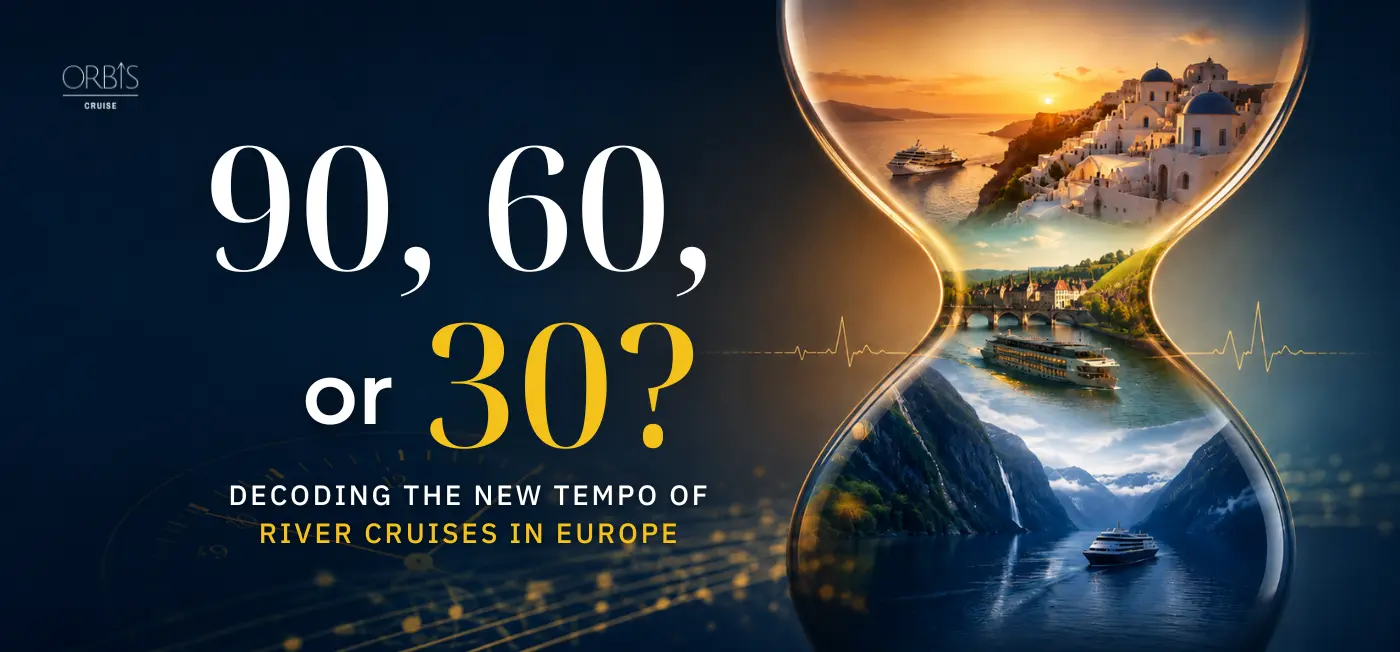
In 2026, options have expanded rapidly. A recent update by Cruise Lines International Association confirms that European cruise routes continue to grow as demand rises, with 37.2 million people cruising globally in 2025, the highest on record, and European source passengers reaching 8.9 million, a 5.3% year-on-year increase. More itineraries now exist across coastal routes and river cruises in Europe, but clarity has not kept pace.
At 2:00 PM, your day can unfold in very different ways. You could be stepping into the lively energy of a Roman piazza, where history and city life move side by side. You could be gliding past vineyard-lined banks on one of the best river cruises in Europe, where each moment slows and settles. Or you could be standing on deck, surrounded by still water as a fjord rises quietly around you.
It is the same continent. The experience changes with the rhythm.
The difference lies in what happens between destinations. Some journeys move quickly, filling each day with new stops. Others slow down, allowing each place to settle in.
So, what is your number? Let us explore the three distinct rhythms of Europe: 90, 60, and 30 and find the one that fits the way you travel.
In music, Allegro signals a bright, quick tempo. On a European cruise, this becomes a 90 BPM rhythm, a journey that moves with intent, where each day introduces a new setting without breaking the flow. It is not about rushing. It is about how well each moment connects to the next.
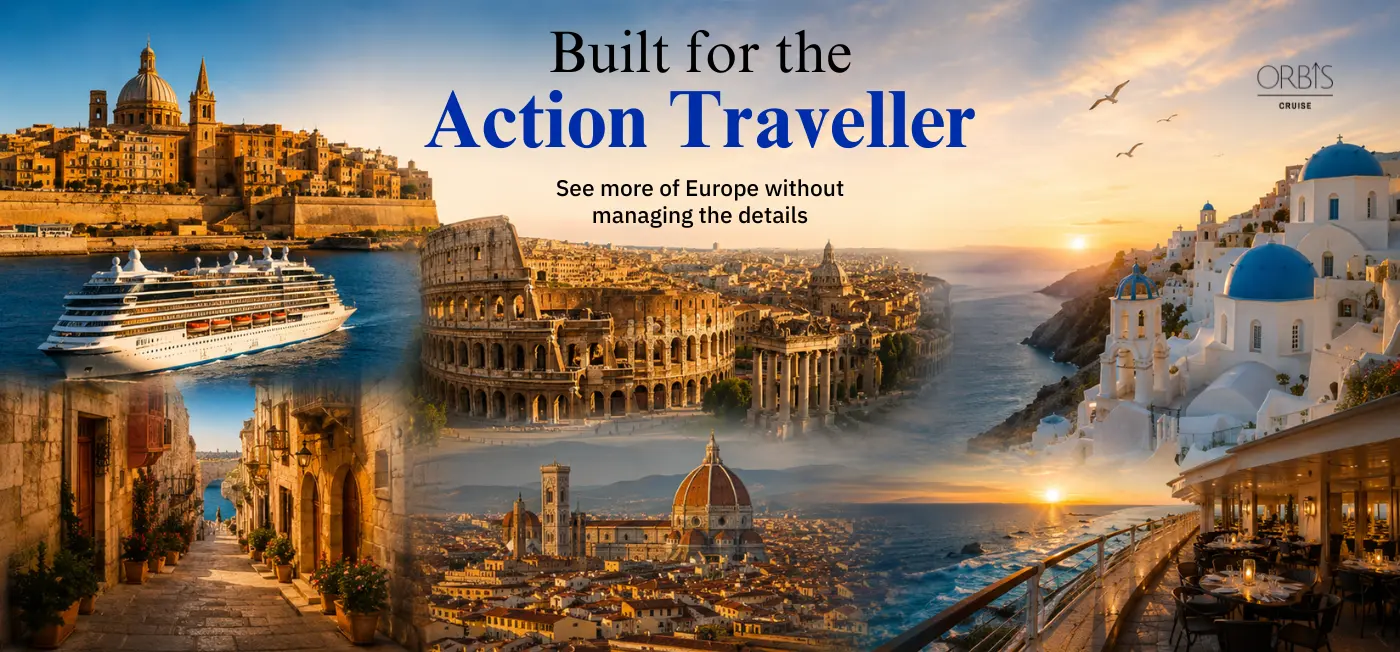
The journey often begins with the clarity of Valletta. As the ship docks, the city opens almost immediately. Honey-toned buildings, narrow streets, and layered history sit just beyond the harbour. There is no long transition. You step off and step straight into the experience.
As the route moves towards Italy, the scale expands. Civitavecchia connects to Rome, where ancient landmarks and modern life coexist. Soon after, Livorno opens access to Florence and Pisa. Within a short span, the journey moves from imperial history to Renaissance detail. The shift feels natural because the ship manages the distance in between.
By the time you reach the Greek Isles, the rhythm softens slightly without losing its energy. Santorini introduces open views across the Aegean, while coastal stops like Corfu bring a quieter balance. The journey remains active, but it begins to breathe.
This is what defines a 90 BPM route. A sequence of places that feel varied yet connected, without the friction of constant planning.
Moments That Define the 90 BPM Rhythm
Immediate immersion: Valletta allows direct access from the port to the city, with minimal transition
Rapid cultural shifts: Rome to Florence within a day, each offering a completely different perspective
Visual contrast: Moving from Italy’s historic centres to the open coastline of the Greek islands
The reset between stops: Evenings at sea create space to pause before the next destination
The In-Between That Makes It Work
On a high-energy route, the time at sea becomes essential. It is where the journey settles. You move from active exploration to open decks, evening dining, and quiet views across the Mediterranean. These moments prevent the itinerary from feeling compressed and keep the experience balanced.
Is This Your Rhythm?
This pace is designed for the Action-Oriented Traveller. If your goal is to maximise every sunrise and see the "Greatest Hits" of the Mediterranean without the stress of constant packing and unpacking, you are an Allegro traveller.
In music, Andante describes a "walking pace." On the water, this translates to the 60 BPM rhythm of river cruises in Europe. This is a journey of steady movement and easy breathing, where the destination doesn't just appear; it unfolds.
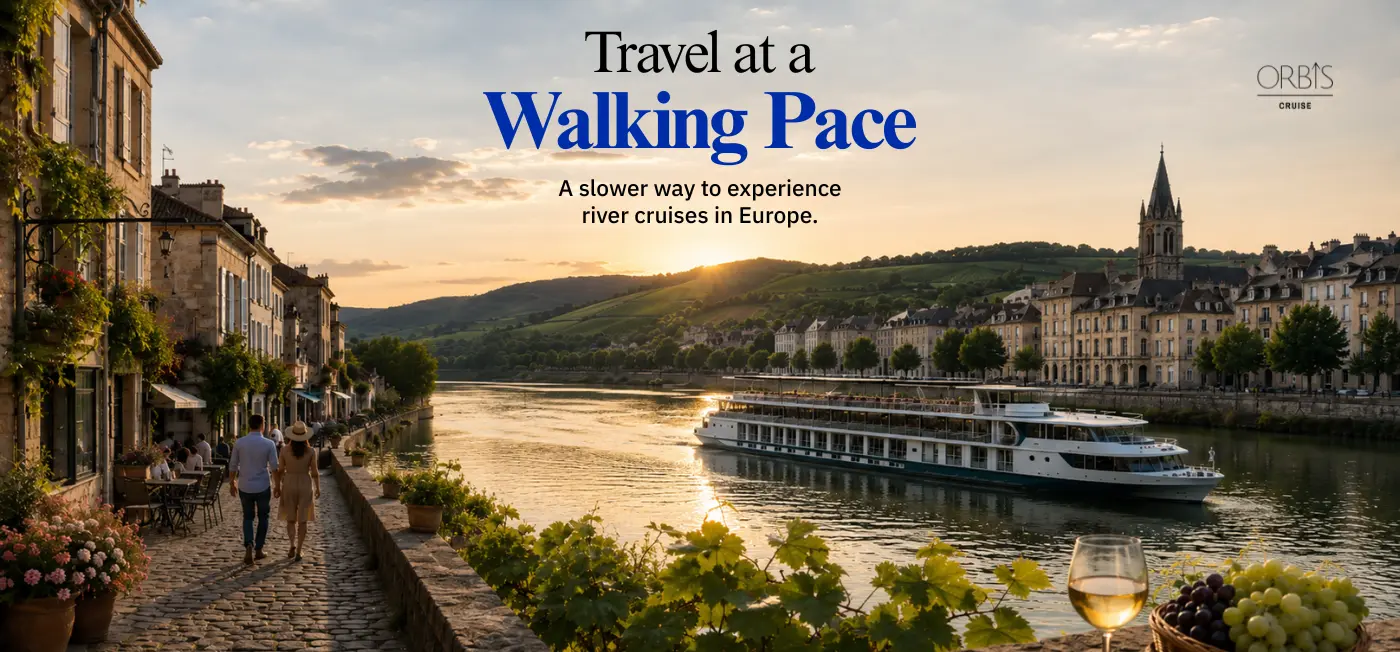
The experience is defined by a lack of barriers. On a Bordeaux river journey, there is no distant industrial port or long bus transfer. Your ship glides directly into the heart of the region, docking alongside limestone buildings and sun-drenched quays. The transition from ship to shore is so seamless you barely notice it happening.
In towns like Libourne or Blaye, the "Andante" pace truly takes hold. These are places designed for walking. Because the ship stays longer and the distances are shorter, the pressure to "see it all" disappears. You have the luxury of time: time to linger over a glass of Saint-Émilion, time to talk to a local market vendor, and time to notice the architectural details that faster travellers miss.
This is why the best river cruises in Europe are becoming the preferred choice for 2026. They offer a "deep dive" rather than a surface skim. You aren't just visiting a region; you are living within its rhythm for a few days.
Moments That Define the 60 BPM Rhythm
Seamless docking: Ships arrive within towns, removing long transfers
Closer exploration: Places like Cadillac and Libourne feel accessible and unhurried
Regional identity: Each stop reflects local traditions, especially across the Bordeaux river cruises
Consistent flow: Short distances between stops maintain a steady pace
The In-Between That Makes It Work
On a river journey, movement is continuous but subtle. The scenery changes gradually as the ship moves through the landscape. Vineyards, small villages, and open stretches of water replace the sharp transitions seen on coastal routes. This continuity creates a sense of calm that defines the experience.
Is This Your Rhythm?
This pace is for the Cultural Explorer. If you prefer depth over distance and want a holiday where you can truly "unpack once" and settle into the local atmosphere, the 60 BPM flow of a river cruise is your perfect match.
In music, Adagio is a call for a slow, deliberate, and soulful pace. On a Norwegian fjords cruise, this becomes a 30 BPM rhythm where movement almost fades into stillness. Here, the journey is not shaped by what you "do" at the destination, but by the quiet power of the landscape as you pass through it.
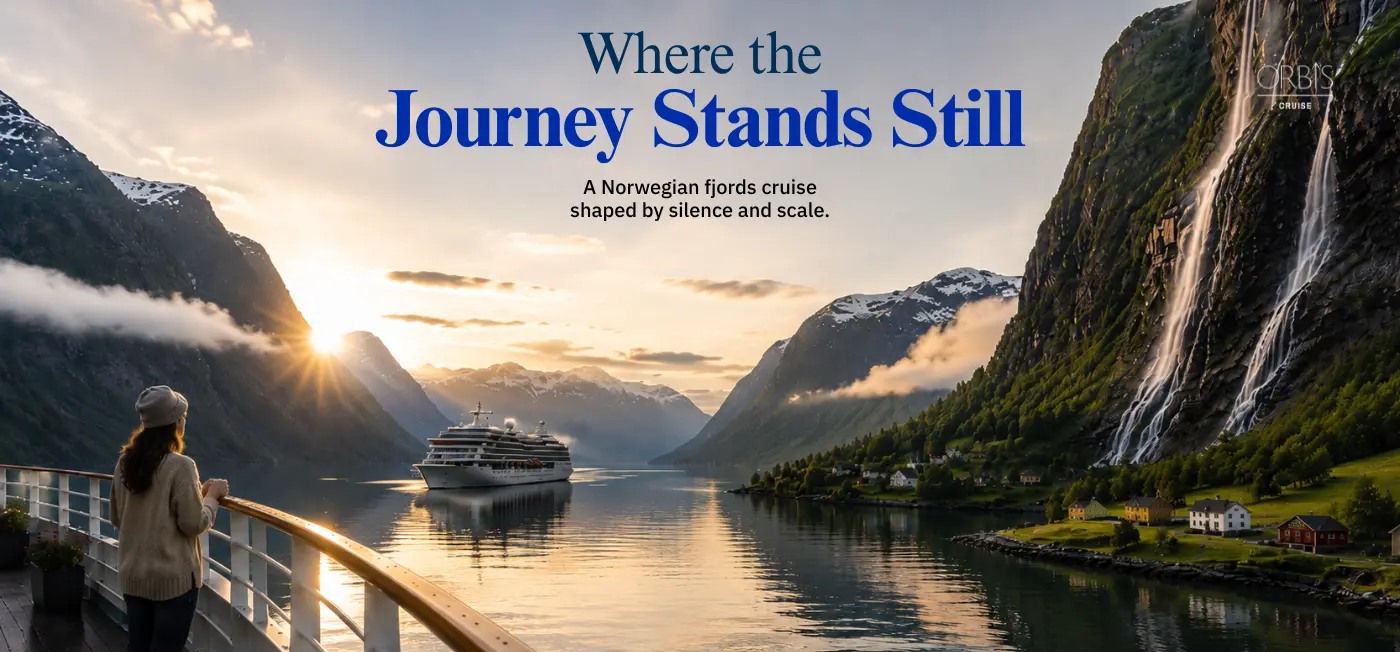
The shift happens the moment the ship turns into the fjords. The world becomes silent. In 2026, new regulations mean many ships now glide through these waters using electric power, removing the hum of engines and leaving only the sound of distant waterfalls. There is no rush to "get to the port." The experience is happening right now, on deck, as cliffs rise 1,000 meters above you.
Places like the Geirangerfjord don't ask for a busy itinerary. They ask for your presence. You might spend an entire morning watching a single glacier come into view, or observing a tiny, colourful village tucked into a green valley. The movement is so steady and calm that the massive landscape feels like it’s standing still just for you.
This is the ultimate "Coolcation", a 2026 trend in which travellers choose the crisp, clean air of the North over the heat of the South. It is travel at its most restorative.
Moments That Define the 30 BPM Rhythm
Silent Sailing: Experiencing the "Adagio" rhythm without the noise of traditional engines, especially in World Heritage sites.
The Scale of Observation: Watching a waterfall like the "Seven Sisters" unfold over 20 minutes, not 20 seconds.
Minimal Transitions: Days where the "port" is just a small wooden pier, and the real highlight is the six hours of scenic sailing that preceded it.
The "Inverse" Detail: In the North, the "in-between" is the entire story. There is no separation between "travelling" and "arriving." From the moment you wake up to the moment the midnight sun dips toward the horizon, you are already there.
Is This Your Rhythm?
This pace is for the Restorative Traveller. If you are looking for a complete mental reset, with the goal of disconnecting from the noise of a busy life and reconnecting with the scale of nature, the 30 BPM Adagio of the fjords is your sanctuary.
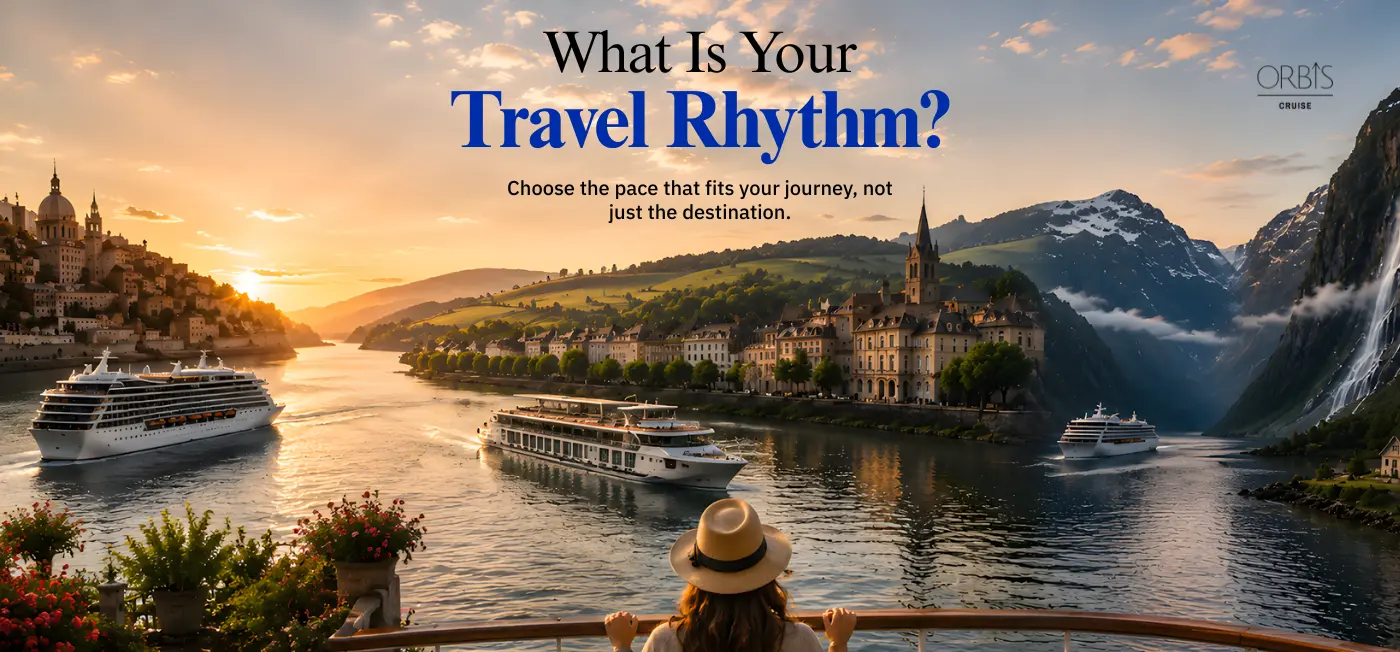
In a year where Europe is more popular than ever, the most important travel decision you make isn’t the destination, it’s the BPM.
As we have seen, the continent doesn't have just one speed. You can choose the 90 BPM Allegro of the Mediterranean to capture the vibrant energy of multiple cultures. You can opt for the 60 BPM Andante of a river cruise to walk through history at your own pace. Or, you can settle into the 30 BPM Adagio of the North to find a stillness that only the fjords can provide.
The "perfect" cruise is simply the one that matches your personal heartbeat. Whether you crave the rush of a Roman plaza or the silence of a Norwegian morning, the right rhythm ensures you return home feeling inspired rather than exhausted.
What is your travel tempo for 2026?
Looking at the best river cruises in Europe, Mediterranean sailings, or a Norwegian fjords cruise
Orbis Cruises helps you choose routes that are structured around flow, not just destinations. With curated itineraries, transparent pricing, and dedicated support, every part of the journey is designed to feel connected and easy to navigate.
Call +44 113 517 5272
Explore available sailings and find the rhythm that fits your travel style
| 1B, 1st Floor, 142 Johnson Street, Southall, UB2 5FD |





 UK
UK
 US
US IN
IN
SHARE ON